
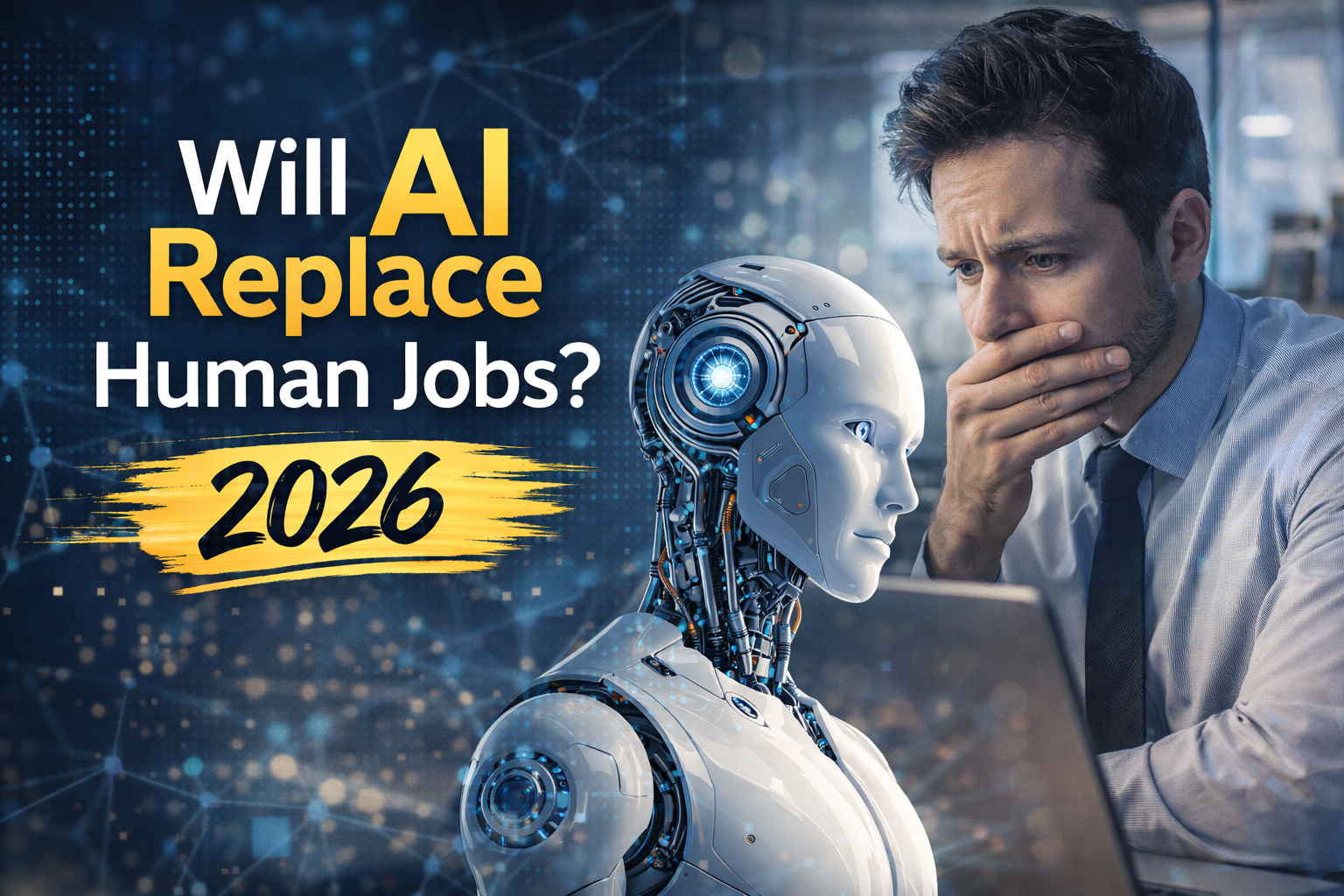
Will AI take human jobs in 2026 or after that? This is a common question today. Many peoples feel worried about their future. The truth is that AI will change jobs but it will not remove all jobs. Some work will become automatic but new work will also be created. Jobs that are in danger are simple and repetitive jobs. For example data entry, Factory line work basic customer support telemarketing and simple accounting tasks. These jobs follow clear rules and AI systems can do them faster and cheaper. Some driving jobs may also change because of self driving technology.
Jobs that are safer are those that need human thinking creativity and emotions. For example teachers, Doctors, Nurses, Psychologists, Social workers, Managers and creative artists. Skilled trades like electricians, Plumbers and mechanics are also safer because they need hands on work and problem solving in real situations. Technology jobs like software, Development, Cybersecurity and AI management are also strong career choices.
In this blog post we’ll explore the real impact of AI on employment, Which jobs are at risk, Which are safe and how you can prepare for the future.
What Is AI and Why Is It Growing So Fast?
Artificial intelligence means machines and software that can do tasks which usually need human thinking. These systems can learn from information and improve with time. They can solve problems and make decisions based on data. They can also understand and use language in a simple way. AI works by studying patterns in large amounts of data. After learning these patterns it can give answers and many suggestions. For example it can recognise, Faces in photos and answer questions and suggest videos. It does not think and feel like a human. It only follows instructions and learned patterns.
AI is becoming part of daily life. It is used in phones, Hospitals, Banks, Schools and many other places. It helps peoples work faster and handle large amounts of information. Even though it is powerful it still needs humans to guide it and control how it is used.
AI is growing fast because
- Technology is becoming cheaper
- Businesses need faster and smarter systems
- Companies want to reduce costs
- Data is available in huge amounts
AI is not only used in tech companies now. It has become part of many different fields. In healthcare it helps doctors check reports and find diseases faster. In education it supports students with online learning and gives quick feedback. In banking it helps detect fraud and manage accounts safely. In marketing it studies customers behaviour and helps businesses understand what people like. It is even used in creating content like writing music design and videos.
AI is sharing into daily life step by step. Many companies use it to save time and improve clarity. It helps people do their work better and faster. Even small businesses are starting to use simple AI tools. This shows that AI is no longer limited to one area. It is becoming a normal part of modern life and work.
Will AI Replace Human Jobs Completely?
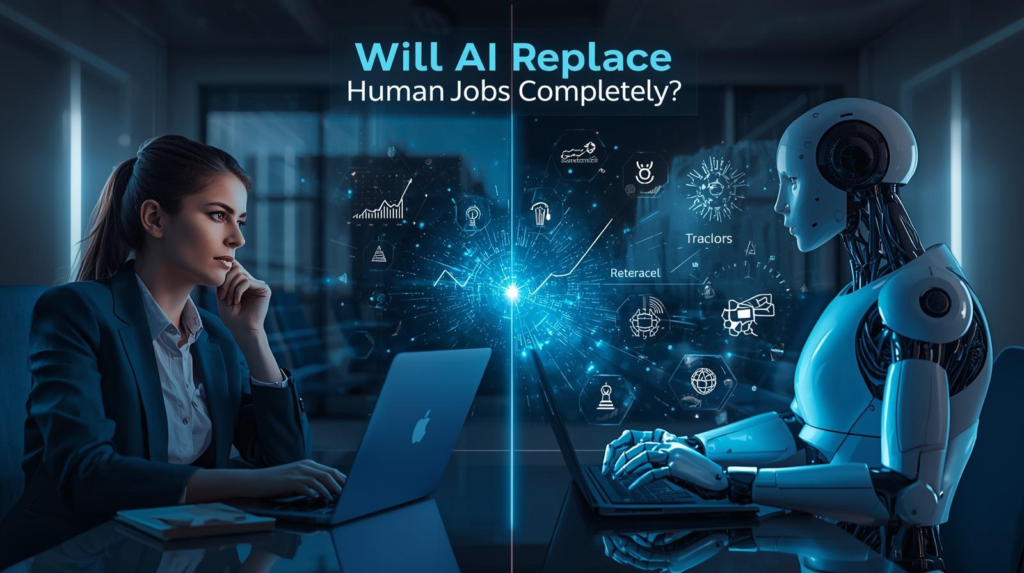
The answer is NOT simple but one thing is clear there will be big changes in jobs. AI will replace some tasks but it will not completely remove whole professions. Many jobs will not go away. Instead they will grow and change with time.
AI is very good at doing routine work. It can handle tasks that follow fixed rules. Because of this some duties inside different jobs may be taken over by machines. However this does not mean the entire job will end. In many cases peoples will focus on more important and creative parts of their work while AI handles the basic tasks. Global jobs trends show that automation usually replaces repeated work but it also creates new roles. These new roles need human skills like creativity, Communication, Leadership and emotional understanding. For example when new technology enters a company there is a need for peoples they can manage it guide others and solve hard problems.
History also shows that when new technology appears it changes the way peoples work. Some old tasks go away but new opportunities open up. The same is happening now. The future of work will depend on how ready peoples are to learn new skills and adapt to change. Those who improve their abilities and stay soft will find new chances to grow.
Jobs That Are Most at Risk of Being Replaced by AI
1. Data Entry Jobs
2. Customer Support
3. Manufacturing & Factory Workers
4. Cashiers
5. Basic Content Writing
Here we explain in detail these Jobs That are Most At Risk.
1. Data Entry Jobs

Data entry jobs are simple office jobs where a person types information into a computer system. This information can be names, Phone numbers, Addresses, Sales records, Medical files and other details. The main task is to enter data correctly and quickly. Peoples working in this role usually use spreadsheets databases and company software. Data entry work needs good typing speed and strong attention to detail. A small mistake can create problems later. Workers must stay focused for long hours because the job can be routine. Many companies hire data entry staff in offices banks hospitals schools and online businesses.
In the past this job was very common because companies had a lot of paperwork. Now many systems can automatically collect and store data. Software can scan documents read text and save information without much human help. Because of this change the demand for basic data entry jobs is slowly dropping. However data entry skills are still useful. Peoples who work in this field can learn new skills like basic computer knowledge, Data management and office administration. By improving their abilities they can move into better roles such as office assistant records manager and customer support staff.
Data entry jobs may not grow fast in the future but they can be a starting point for someone beginning their career. Learning and growing beyond simple typing tasks is the key to long term success.
2. Customer Support

Customer support at a basic level means helping customers with simple questions and common problems. Peoples in this job answer phone calls reply to emails and chat with customers online. They help with things like tracking an order, Resetting a password, Explaining a bill and giving basic product information. This job needs good communication skills and patience. A customer support worker must listen carefully and speak in a polite and calm way. Customers may feel confused and upset so it is important to stay respectful and helpful. Basic computer skills are also needed because most companies use software to manage customer requests.
Many companies now use automated systems to handle simple questions. Chat systems and recorded phone menus can answer common problems without a human agent. Because of this some basic customer support tasks are becoming less common. However human support is still important when problems are hard and when customers need personal understanding. Peoples who start in basic customer support can grow by learning more about products services and communication skills. With experience they can move into advanced support team leadership sales and customer relations roles. This job can be a good starting point for building confidence and professional skills.
3. Manufacturing & Factory Workers
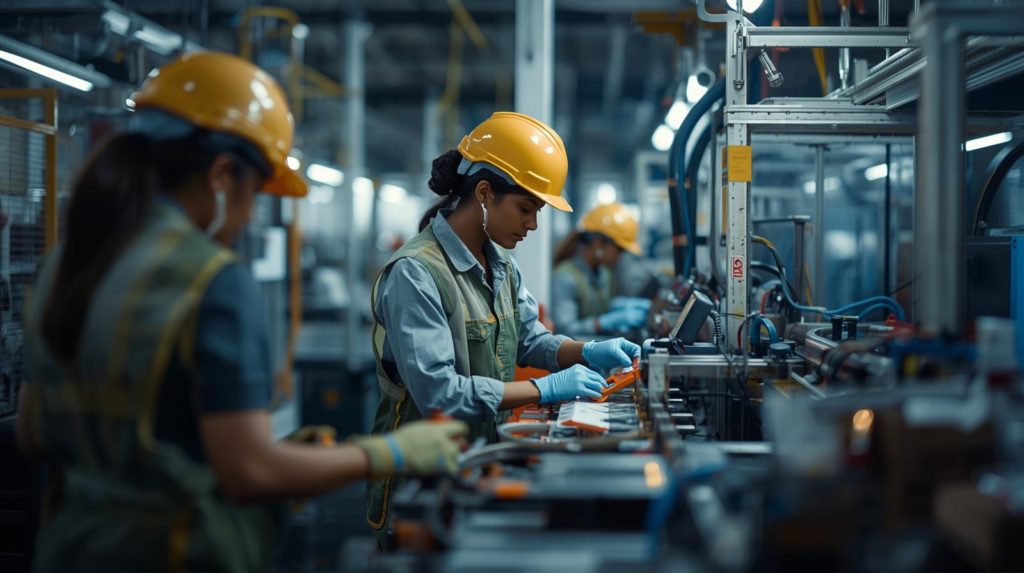
Manufacturing and factory workers are peoples who help make products in factories. They work with machines tools and tools to produce items like clothes, Cars, Electronics, Food and many other goods. Their tasks may include joining parts, Packing products, Checking quality and operating machines. This type of work often follows a fixed routine. Workers may repeat the same task many times during a shift. The job can be physically demanding because it may require standing for long hours lifting materials and working in noisy environments. Attention to safety is very important because factories use heavy machines.
In recent years many factories have started using advanced machines and robots. These machines can work faster and for longer hours without getting tired. Because of this some simple and routine tasks are now done by automated systems. This has reduced the need for certain basic factory roles. However factory workers are still important. Skilled workers who can operate repair and manage machines are in demand. Peoples who learn technical skills and understand modern equipment have better job security. Training in machine handling, Safety rules and basic technical knowledge can help workers grow into higher positions like supervisors and machine technicians. Manufacturing jobs are changing but they are not leaving completely.
4. Cashiers

Cashiers are workers who handle payments in shops supermarkets restaurants and other stores. Their main jobs is to scan items tell the total amount and take payment from customers. They may accept cash cards and digital payments. After payment they give a receipt and sometimes help pack items. This job needs basic maths skills and attention to detail. A cashier must count money correctly and make sure the right change is given. They also need good customer service skills because they speak with many peoples every day. Being polite, Patient and friendly is important. In many places self checkout machines are becoming common. Customers can scan and pay for their own items without a cashier. Because of this some cashier jobs are decreasing especially in large stores. Automated systems can work quickly and reduce waiting time.
Even with these changes cashiers are still needed. Not all customers feel comfortable using machines. Some situations need human help such as handling returns solving price problems and helping customers. Peoples working as cashiers can improve their skills and move into roles like store, Supervisor, Sales assistant and customer service worker. Like many other jobs this role is changing but it still offers work opportunities especially for beginners.
5. Basic Content Writing

Basic content writing means creating simple written material for websites, Blogs, Social media posts, Product descriptions and emails. The main goal is to share information in a clear and easy way. Writers at this level usually follow simple steps and write short articles and promotional text. This job needs good grammar clear thinking and the ability to explain ideas in simple words. A basic content writer must understand the topic and write in a way that connects with peoples. Meeting deadlines and following guidelines are also important parts of the work.
Today many online tools can quickly create short articles and simple posts. Because of this some basic writing tasks are becoming less common. Simple product descriptions, Short summaries and common topics can now be produced with automated tools. However writing that needs creativity original ideas and deep understanding still requires human effort. Writers who improve their research skills reporting ability and creative thinking can move to higher roles like content guide editor and brand writer. Basic content writing can be a starting point but growing skills and learning new techniques is important for long term success.
Jobs That AI Cannot Easily Replace
1. Healthcare Professionals
2. Creative Professionals
3. Teachers & Trainers
4. Skilled Trades
5. Leadership & Management Roles
Here we explain in detail these Jobs That AI Cannot replace easily.
1. Healthcare Professionals

Healthcare professionals are peoples who take care of sick and injured patients. This group includes doctors, Nurses, Surgeons, Pharmacists and medical technicians. They work in hospitals clinics and health centres. Their main goal is to protect life reduce pain and improve health. This job needs strong knowledge training and responsibility. Doctors study for many years to understand diseases and treatments. Nurses provide daily care give medicines and support patients emotionally. Medical workers must make careful decisions because their choices can affect someone’s life.
Technology is now playing a bigger role in healthcare. Machines can help check reports scan the body and store patient records. Some systems can even suggest possible diseases based on symptoms. These tools help medical staff work faster and more exactly. Even with advanced technology healthcare professionals remain very important. Caring for patients needs understanding and human connection. Patients often feel worried and they need comfort and trust. Machines cannot replace that human touch. In the future healthcare workers who learn to use modern tools will have even better opportunities. The field may change but the need for skilled and caring professionals will always remain strong.
2. Creative Professionals

Creative professionals are peoples who use original ideas in their work. This group includes writers, Designers, Artists, Filmmakers, Musicians and photographers. Their jobs is to create something new that connects with people through emotion style and meaning. Creative work is not only about skill. It also needs deep thinking personal experience and a unique point of view. A designer may create a brand look that tells a story. A writer may share ideas that inspire readers. A musician may express feelings through sound. This kind of work often comes from human emotion and life experience.
Today digital tools are helping creative people work faster. Software can edit photos, Improve sound quality and suggest design ideas. Some tools can even generate simple images and text. These tools can support the creative process and save time. However true creativity still depends on human thought and feeling. Original telling stories cultural understanding and emotional depth are hard to replace. Creative professionals who learn new tools and keep improving their skills can grow even more in the future. Creativity will always have value because peoples connect strongly with ideas that feel real and human.
3. Teachers & Trainers

Teachers and trainers are people who help others learn new knowledge and skills. They work in schools, Colleges, Training centres and even online platforms. Their role is to explain topics clearly guide students and help them understand difficult ideas. A teacher does more than just give information. They motivate students answer questions and support them when they struggle. Good teachers understand that every student learns in a different way. They adjust their methods to match the needs of the class. Patience clear communication and strong subject knowledge are very important in this profession.
Technology is now being used in education. Online classes. Digital books and learning apps are common. Some systems can check homework and give quick feedback. These tools help teachers save time and manage large groups of students. Even with modern tools teachers remain very important. Learning is not only about facts. Students need support and human connection. A teacher inspires confidence and builds character which machines cannot fully do.
In the future teachers who learn to use new technology will have even more opportunities. Education may change in style but the need for serious teachers and trainers will always remain strong.
4. Skilled Trades
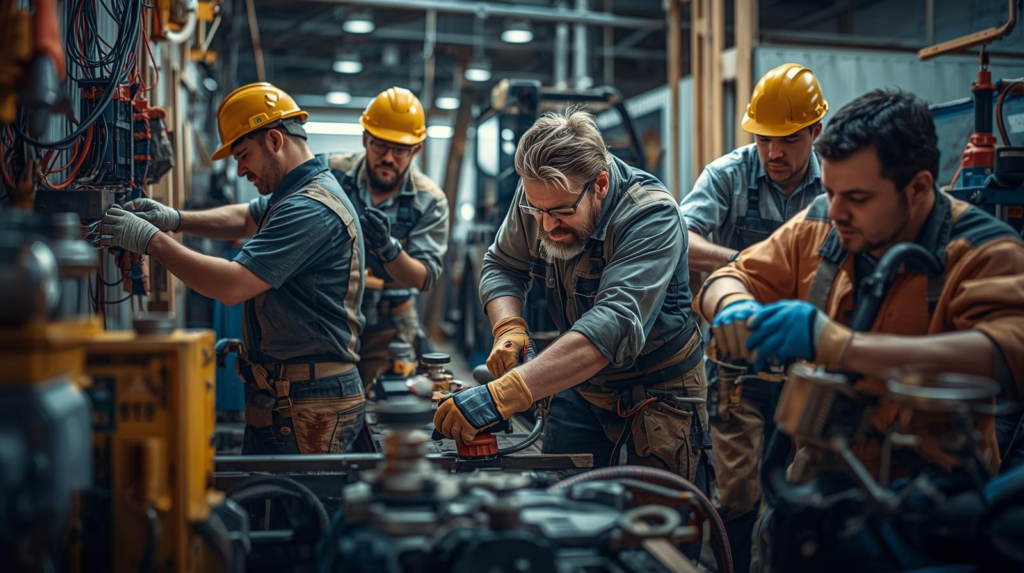
Skilled trades are jobs that need special training and practical skills. These jobs include electricians, Plumbers, Carpenters, Mechanics Welders and technicians. Peoples in these roles work with tools machines and materials to build fix and maintain things. Skilled trade workers usually learn through training programs training and technical schools. They gain hands on experience and learn how to solve real problems. Their work often requires physical effort careful planning and strong attention to safety. Many tasks are different each day because every project has its own challenges.
These jobs are very important for daily life. Electricians keep power systems running. Plumbers fix water systems. Mechanics repair vehicles. Without skilled trade workers many basic services would stop working.
Technology is also entering this field. Modern tools and advanced machines are making work faster and more right. However most skilled trade jobs still need human hands and judgement. Every building and repair situation can be different and requires practical thinking. In the future skilled trades are expected to stay in demand. Peoples who continue learning new techniques and safety standards will have strong job security. Skilled trades offer strong careers for those who enjoy working with their hands and solving real world problems.
5. Leadership & Management Roles

Leadership and management roles are jobs where a person guides a team and makes important decisions for an organisation. Managers supervisors and team leaders are responsible for planning work setting goals and making sure tasks are completed on time. They also solve problems and handle challenges inside the team. A good leader does more than give orders. They motivate peoples build trust and create a positive work environment. Strong communication skills are very important in this role. Leaders must listen to their team understand and give clear direction. They also need confidence and the ability to make smart decisions under pressure.
Technology can help managers by providing reports data and performance tracking. Digital tools can show progress and highlight problems. However machines cannot fully replace leadership. Handling peoples requires emotional understanding patience and the ability to inspire others. In the future leadership roles will continue to be important. Organisations will always need peoples who can guide teams and make strategic decisions. Those who improve their communication skills learn modern tools and develop strong problem solving abilities will succeed in management positions. Leadership remains a valuable and respected career path.
How AI Is Creating New Jobs?
Instead of only changing existing jobs AI is also creating new career opportunities. As technology grows companies need peoples who can build manage and improve these systems. This has opened doors to many new types of work.
For example there is a growing need for AI specialists who design and train smart systems. Data experts are needed to study large amounts of information and find useful patterns. Machine learning engineers work on improving how systems learn from data. There are also jobs for people who test technology and make sure it works safely.
Another new area is AI policy. Companies and governments need experts who can guide how technology should be used in a responsible way. Cyber security professionals are also important because advanced systems must be protected from risks. Even creative fields now have new roles where people combine Ideas with technology. Content creators designers and marketers use modern tools to produce better work. This shows that AI is not only reducing some tasks but also building fresh career paths. Peoples who are ready to learn new skills and understand modern tools can find strong opportunities in the changing job market.
AI is also creating new Jobs
AI engineers
Data Experts
AI ethics specialists
Machine learning Experts
Prompt Engineers
Automation Consultants
The Real Impact of AI on Employment in 2026?
AI is changing the jobs market in three major ways
1. Job Replacement
2. Job Transformation
3. Job Creation
We Define These Three Impacts in Details
1. Job Replacement

Job replacement means when machines and technology take over tasks that were once done by peoples. This normally happens in roles where the work is repetitive simple and follows fixed rules. When a task can be done faster cheaper and with fewer mistakes by a machine companies may choose automation.
For example jobs like basic data entry, Simple customer support, Factory line work and cashier roles are more likely to be affected. In these jobs the main duties often repeat in the same way every day. Technology can handle such tasks without getting tired. However job replacement does not always mean a person loses work completely. In many cases only certain tasks are removed while the rest of the job remains. Workers may shift to more complex duties that require human thinking communication and decision making.
History shows that when new technology appears some jobs decrease but new ones also grow. The key difference today is the speed of change. Peoples need to update their skills more often than before. To stay secure workers should learn new abilities improve digital skills and stay flexible. Job replacement is part of progress but those who adapt can still find strong opportunities in the future.
2. Job Transformation

Job transformation means a job changes over time instead of disappearing. The main role stays the same but the way the work is done becomes different. This normally happens when new technology tools and systems are introduced in the workplace. For example a bank employee in the past handled all records on paper. Now most records are digital. The job still exists but the daily tasks have changed. A marketing worker may now use online tools and data reports instead of only traditional methods. A teacher may use online platforms along with classroom teaching.
In job transformation some routine tasks are handled by machines and software. This allows workers to focus on more important duties like planning problem solving communication and creative thinking. Instead of doing basic repetitive work they manage systems guide clients and make key decisions. This type of change can be positive for workers who are ready to learn. It gives them a chance to develop new skills and move to higher positions. However those who resist change may struggle. Job transformation shows that the future of work is not only about losing jobs. It is about modifying improving skills and working next to modern tools to stay valuable in the job market.
3. Job Creation
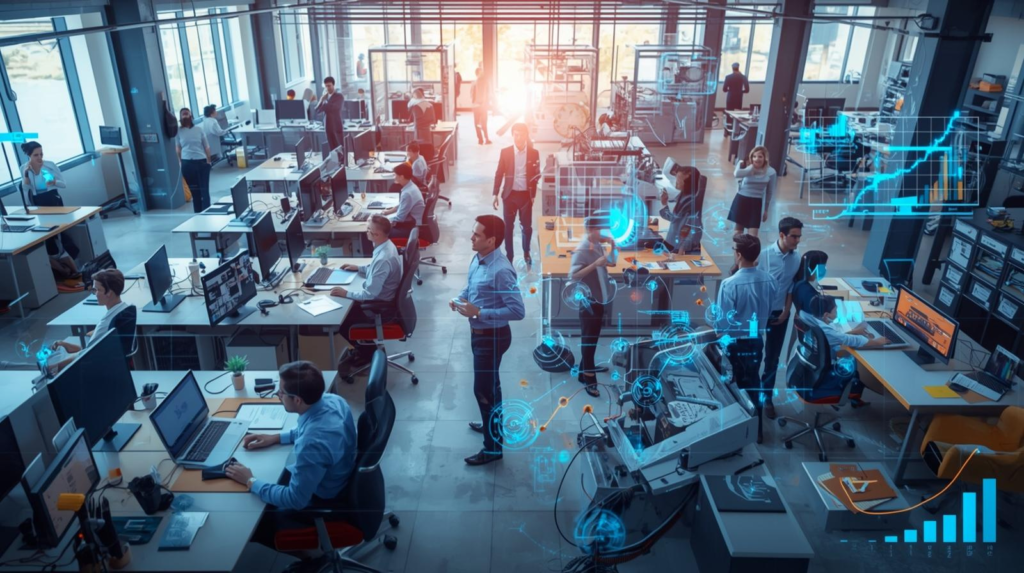
Job creation means new jobs are formed because of changes in the economy technology and society. When new industries grow they need workers with fresh skills. This creates career opportunities that did not exist before.
For example when the internet became popular many new roles appeared such as web developers digital marketers and online customer support staff. In the same way modern technology is now creating jobs in areas like data analysis software development cyber security and system management. These new jobs often need special training and updated knowledge. Peoples must learn how to use modern tools understand digital systems and solve new types of problems. Many companies are looking for workers who can combine technical skills with creativity and communication.
Job creation shows that change can bring opportunity. While some old tasks may reduce new roles open up at the same time. The key is to prepare for these opportunities by learning and staying flexible. The future job market will continue to evolve. Those who are ready to improve their skills and accept new challenges can benefit from the new careers that are being created.
How to Protect Your Career from AI Replacement?
If you are worried that AI might take your jobs you can take simple steps to protect your future.
First keep learning new skills. Try to improve your digital knowledge and understand how modern tools work. Even basic computer skills can make a big difference.
Second focus on skills that machines cannot easily replace. Communication creativity problem solving leadership and emotional understanding are very valuable. These skills help you stand out in any field.
Third be open to change. Instead of fearing new technology try to learn how to use it. Peoples who know how to work with new tools often get better opportunities.
Fourth consider upgrading your education and getting short courses. Online classes and training programs can help you move into growing fields.
Finally stay positive and normally. The jobs market is always changing. Those who adapt and continue improving themselves usually find new paths. Scary alone will not solve the problem. Taking action and building stronger skills will give you more confidence and better chances in the future.
Frequently Asked Questions (FAQs)
Will AI replace all jobs in the future?
No. AI will automate tasks but cannot fully replace human creativity, Caring and strategic thinking.
Which jobs are safest from AI?
Healthcare, Education, skilled trades and leadership roles are considered safer.
Is AI bad for employment?
Not Always. AI replaces some jobs but also creates new opportunities.
Should students worry about AI?
Students should focus on learning future proof skills like technology, communication and problem solving.
Final Thoughts
AI will not completely replace humans. Instead it will reshape the workforce. Peoples who adapt learn new skills and accept modern tools will succeed in the future job market. The future of work is not humans versus AI. It is humans working with AI. Technology can handle repetitive tasks and process large amounts of data. Humans bring creativity judgement and real world understanding. When both work together the results are stronger.
If you start preparing today you can turn fear into opportunity. Learn how new tools work and improve your professional skills. Stay curious and open to change. Small steps like taking a course improving communication skills and learning basic digital knowledge can make a big difference over time. Every major change in history has created risk but it has also created growth. The same is happening now. Those who resist change may struggle but those who adjust can move ahead.
AI should be seen as a tool not a threat. It can increase productivity support better decisions and open doors to new careers. With the right mindset and continuous learning you can build a secure and successful future in a world where humans and technology grow side by side.